

How did Minneapolis decline? Two ways, to borrow from Ernest Hemingway. Gradually and then suddenly.
When people explain why Minneapolis has struggled to recover since COVID, the story usually goes like this: The pandemic emptied downtown offices, and the aftermath of the George Floyd protests dealt the city a knockout blow. More recently, federal immigration enforcement has been added to the story.
Each of these events undoubtedly hurt Minneapolis. But they describe only what happened suddenly.
The city’s decline began long before COVID sent workers home or protests burned parts of Lake Street. By focusing only on the dramatic moments, we ignore the deeper forces that left Minneapolis vulnerable in the first place.
The decline also happened gradually — through years of poor planning decisions, policies that pushed away business, expanding government costs and slowing economic growth that quietly eroded the city’s economic foundation. When a sudden shock finally arrived, the foundation was already cracked.
Acknowledging the real story requires an uncomfortable admission: Our policies, our leadership and even parts of our social culture have failed us.
For decades, state and city leaders, many of whom have no private-sector experience themselves, have prioritized political agendas, pet projects and ideological experiments over practical prosperity.
Consider the fate of Nicollet Mall.
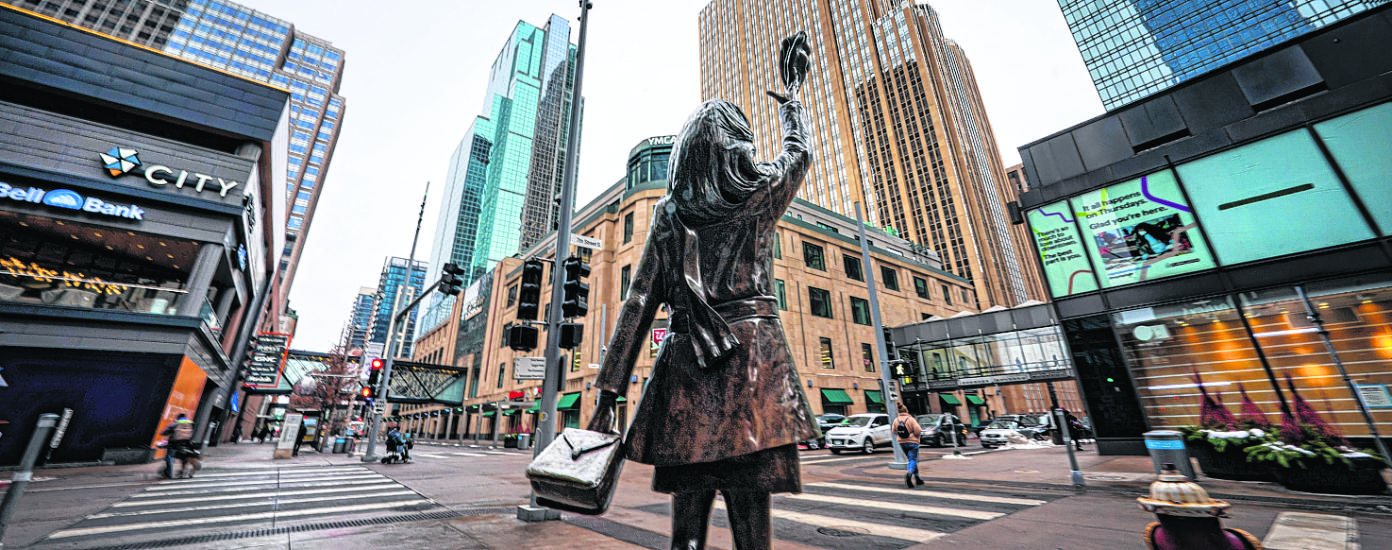
For generations, it served as the commercial spine of downtown Minneapolis, lined with upscale stores, restaurants and premium offices. A major renovation project launched in 2015 promised to revitalize the corridor. Instead, the two-year project hollowed out downtown commerce.
Today Nicollet Mall is defined by its empty storefronts, abundant bus stops, loitering and crime — or at least the perception of it. What once attracted businesses and visitors to Minneapolis now keeps them away, thanks largely to misguided city planning and poor execution.
Transportation planning followed a similar path.
Minneapolis spent years expanding bike lanes throughout downtown and other parts of the city, reducing parking availability and narrowing vehicle lanes. For the benefit of a handful of bike enthusiasts, city planners made it more difficult for the vast majority of commuters to come downtown for work or entertainment.
Minnesota remains a carcommuting culture. No one should expect busy parents to shuttle families around on bikes or Metro Transit in the dead of winter. The failure of the Northstar line and underutilized light rail reflect that reality. Yet planners have repeatedly pursued projects that prioritize niche interests over improving conditions for businesses or basic common sense.
Other policy choices have further weakened confidence in the city. The elimination of loitering laws, the previous tolerance of large homeless encampments and the broader push to defund the police all have contributed to a perception of crime and disorder.
Some businesses have hired private security to escort employees to their cars after work. Others have moved operations elsewhere entirely.
Public safety is the foundation of a thriving city, and when that foundation weakens, investment exits.
In a world where capital and skilled workers are increasingly mobile — and getting more mobile with technology — policy differences among cities and states matter more than ever.
Jobs are shifting, and Minnesota has experienced net negative domestic migration for much of the past two decades.
Population growth has increasingly depended on international immigration rather than attracting workers and families from other states.
Meanwhile, faster-growing states such as Texas, Florida, Arizona and Tennessee have aggressively competed for investment and talent with lower taxes, lighter regulation and pro-growth economic policies.
Minnesota has moved in the opposite direction.
Government spending in Minnesota — primarily on social and welfare services — has expanded steadily. Financing that expansion has pushed Minnesota’s to be among the worst states for tax competitiveness.
Taken together, decades of planning missteps and poor policy choices have gradually weakened the economic foundation that once supported Minneapolis’ and Minnesota’s economic exceptionalism.
The data lays bare these facts.
Beginning around 2000, the state’s economic growth started trailing the national average, according to the Minnesota Chamber of Commerce. From 2000 to 2022, Minnesota’s real GDP grew roughly 1.8% annually compared with about 2.1% nationally. The growth gap has widened significantly post-pandemic.
The Twin Cities metro region contributes 65-70% of the state’s GDP, so this widening gap is being driven by the slowing metro economy. When Minneapolis declines, so too does the state.
Perceptions persist. Apologists often point to Minnesota’s concentration of Fortune 500 headquarters as evidence of enduring strength. Twentyfive years ago, that argument carried weight. Today it doesn’t.
Some of Minnesota’s largest corporations have faced stagnant growth and declining valuations.
Economic vitality comes from expansion and innovation, not simply the presence of large legacy companies.
Even the corporations that remain contribute less to the local labor market than many assume. Target employs more than 400,000 people worldwide, yet only about 35,000 work in Minnesota.
We must also acknowledge the cultural dimension to our challenges.
“Minnesota Nice” has long been celebrated as a civic virtue.
Increasingly, however, politeness seems more like avoidance.
Minnesotans are famously conflict-averse. Direct criticism is softened, delayed or simply unspoken.
When difficult truths go unspoken, problems remain unaddressed.
At the same time, our wonderful Midwestern humility has gradually drifted toward complacency and acceptance.
Expectations have lowered.
Mediocrity has become normalized.
Excellence and accountability are rarely demanded with the urgency they deserve.
Cities rarely decline because of a single event. They decline because warning signs are ignored for too long and issues persist to the point of acceptance.
Cities thrive when they are ambitious, competitive and open about their shortcomings.
Minneapolis must rediscover those traits.
That begins with honesty about how we got here and a willingness to change direction.
The city needs bold goals and leaders willing to prioritize pragmatism over politics. Public spending must be disciplined and transparent. Policymakers must recognize that Minnesota is competing nationally for capital, talent and entrepreneurs — and today we are losing ground.
And if they don’t, we need to hold them accountable — to be willing to change direction — because we deserve excellence, not excuses.
Businesses must have confidence that Minneapolis is a safe and stable place to invest in again. Entrepreneurs must believe they can build and grow companies here. And civic culture must once again celebrate ambition, achievement and excellence.
Minneapolis can recover. Cities can reinvent themselves.
But until we confront the decisions that gradually weakened our foundation, we will continue mistaking symptoms for causes — and Minneapolis’ future will look much like its present.
Matt Hemsley is an institutional investor based in downtown Minneapolis and a lifelong resident of the Twin Cities.