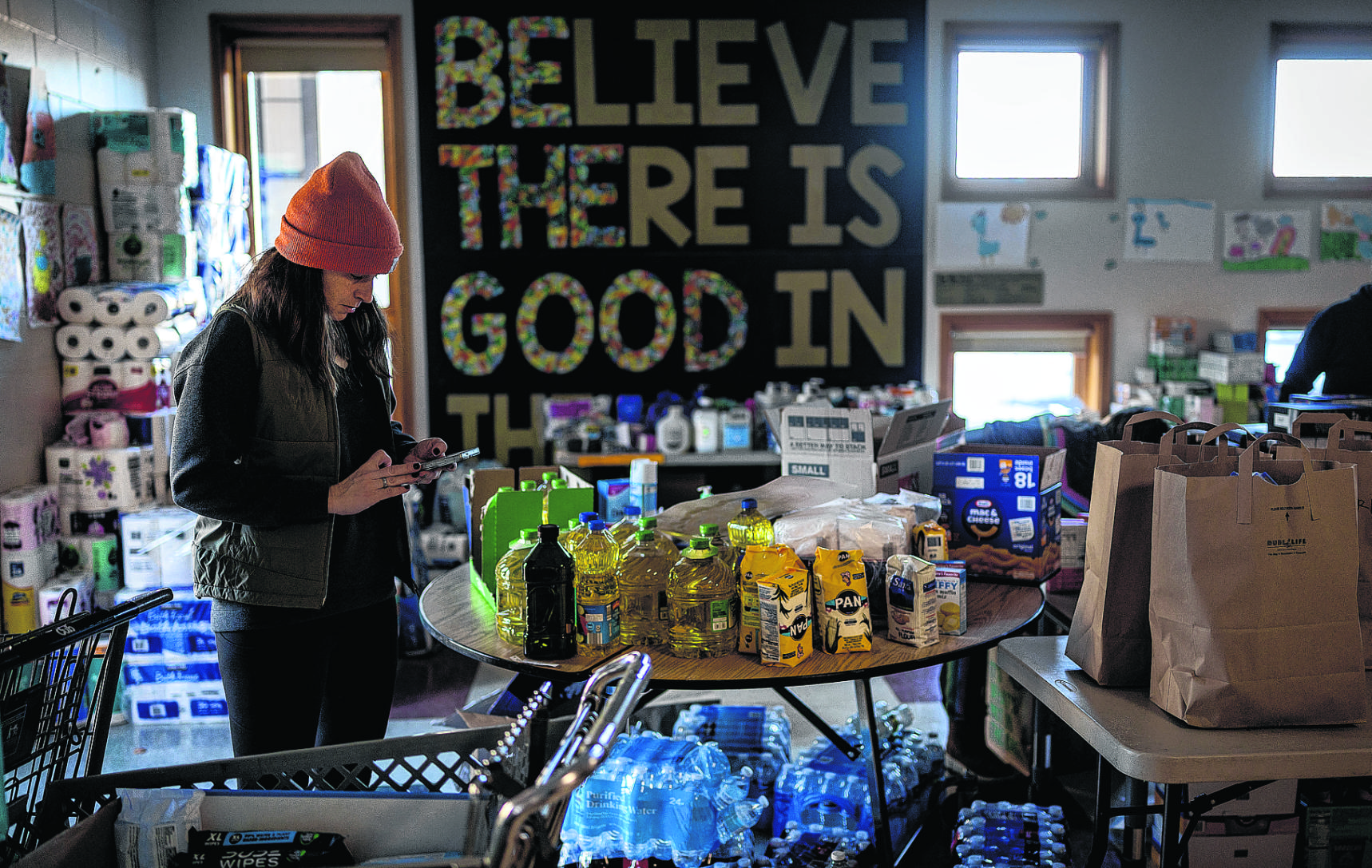
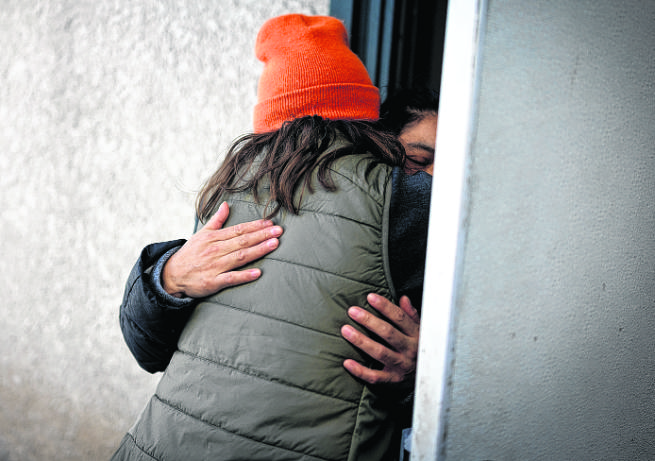


Shelby pulled over her van near the home of a family from Mexico with four young daughters, scanned for suspicious vehicles and typed a quick text in Spanish — Estoy aquí. I’m here.
She had noticed federal agents circling this neighborhood weeks earlier, when she first started delivering groceries to immigrant families too afraid to go outside. So Shelby, a St. Louis Park mom of six, stayed on high alert until the apartment door closed behind her. If she needed it, she had in her pocket a makeshift whistle (the cut-off top of her daughter’s plastic recorder), the symbol of the resistance to federal immigration enforcement.
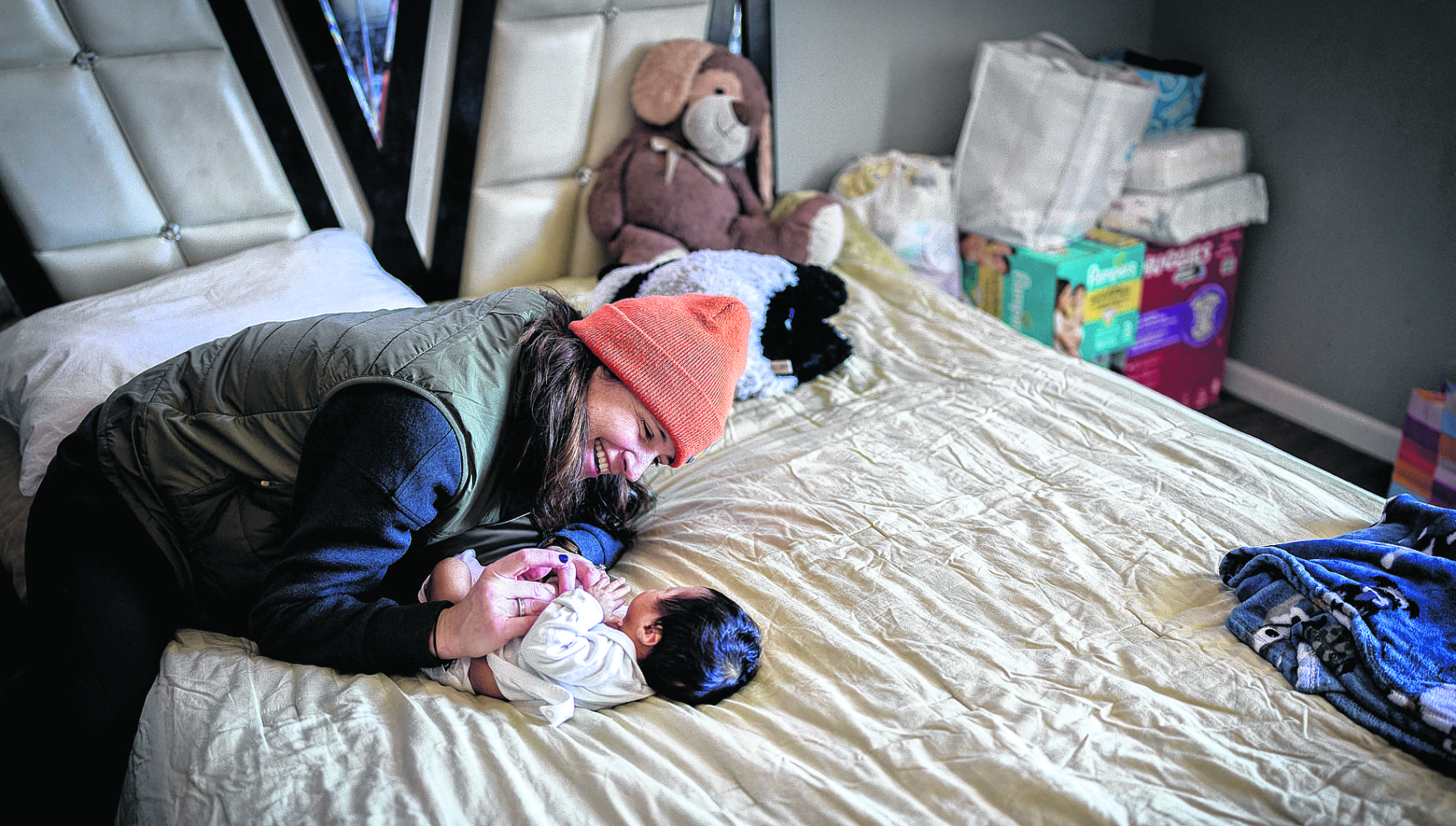
Once inside the family’s place, Shelby, who asked to not use her last name, slipped back into mom mode, unpacking the bags of food, then bouncing the 7-month-old baby on her hip while she guided the oldest girl through a math worksheet.
Shelby is quick to say she’s not an activist. She’s just one of many Twin Cities mothers who have quietly organized behind the scenes in the past three months during the ICE surge in Minnesota, mobilizing a cadre of suburban sports moms over encrypted Signal messages to support immigrant families living in fear.
Many of these parents haven’t been politically active before but are now driven to volunteer by viral images of little kids being detained and the fact that their own children’s classmates are missing from school as attendance drops sharply over ICE fears.
Across the state, hundreds of parents are standing watch for federal agents outside schools during bus drop-off and pick up times, organizing grocery deliveries for families in hiding, transporting others to critical medical appointments and rallying to help with rent payments.
Like many of the volunteer moms, Linsey Rippy of Coon Rapids never considered herself very political before last year.
“As a mom, we want to fix it,” she said. “You see the photos of the children — the little boy with his bunny hat — and you want to do everything you can to fix it.
Because you’re just looking at that photo and thinking ‘that’s a child. That’s my child.’ ”
Most of the volunteers are leaning on the same networks of women they’ve long used to raise their own children — those they met through their neighborhoods or their kids’ classrooms and sports teams.
But instead of group texts about game times, jerseys and tournament logistics, Shelby’s fellow St. Louis Park basketball moms use Signal to organize the new efforts.
Shelby also tapped a separate group of school moms to build an ad hoc system connecting St.Louis Park middle school families with parent volunteers.
“This is our fight as moms because we see other families and other kids in need,” said Jen, one of the St. Louis Park moms who’s been delivering groceries to five families each week.
Like Shelby, Jen also asked that her last name not be used for fear that they’ll expose the people they’re helping.
‘The suburban soccer mom’
Those families include a mom who feared leaving her house, even for a doctor’s appointment, after giving birth just over a month ago. Shelby helped get her to the appointment and has been bringing by a pediatrician friend to check on the infant.
On a recent morning, Jen brought eye drops to a father who had what she guessed was pink eye. He, too, was terrified to go out to see a doctor.
Sometimes though, Jen’s deliveries are just about bringing a bit of joy. A requested packet of Mexican hot cocoa. A bag of Legos and dolls for the kids who can’t play outside. A family art activity kit with a few printed reminders about mental wellness — that was Jen’s idea.
She and Shelby have both noticed that in the last two weeks, the families seem more dejected. The mother of the four girls has been contemplating returning to Mexico.
She doesn’t want her daughters to keep missing school or feel that they have to hide every time they hear a knock at the door.
The mother reminds her daughters that the women who visit are helping them survive and stay in hiding. But, she said through a translator, “we don’t want to keep asking for help. We came here to work and to better the lives of our children.”
Jen and Shelby connected with five immigrant families each through a woman from their basketball moms’ group chat, a teacher in a Minneapolis school where more than 40% of students are Hispanic or Latino.
The teacher had worried about how to meet the needs of the dozens of families she knew weren’t leaving their homes.
That’s when Jen volunteered to help and tapped the other sports moms for backup.
“For us teachers in the trenches, seeing these mothers jump in to help — even outside their own school district — has just brought me to tears,” said the teacher, who asked not to be named because she didn’t have the school’s authorization to talk publicly.
“I think there are a lot of prejudices about what the suburban soccer mom is like,” the teacher said, “but I have been humbled beyond belief. My stereotypes have been completely shattered as they go above and beyond to love on our children and help us do this work.”
Still, amid all the stories about the help that is now getting to her students, there are calls from the moms doing deliveries to immigrant family members who are suddenly not there to answer the door. That happened recently after, a neighbor explained, a mother of the family had been detained by ICE at her immigration appointment.
Just last week, three other parents with children in the same school were detained during check-in appointments with ICE, the Minneapolis teacher said.
Hundreds of volunteers
In the north metro, a similar mutual-aid network has swelled to hundreds of volunteers through the nonprofit Parents for Good. What began last year as a mom-led effort focused on supporting progressive school board candidates and district issues has quickly pivoted to helping families too afraid to leave their homes.
The surge of donations quickly outgrew co-founder Sheighlyn Berbig’s home playroom, and donated goods are now stacked in several basement rooms at Anoka United Church of Christ. There, volunteers rotate through shifts, packing bags of food and supplies that social workers and partner organizations deliver directly to families.
Rippy has been helping vet the many volunteers and said she often gets approached by strangers when unloading donations, offering to help.
“This work isn’t heroic,” she said. “I think a lot of people are just trying to help their community and be a part of something good right now.”
Sometimes Jen and Shelby have a hard time transitioning into being a mom to their own kids after spending their day with families in need, trying to “fix it” in the way they know how. The skills Jen gained to keep her own family of eight running like a “well-oiled machine” — the calendar coordination, the delegating, the grocery shopping and the carpooling — are proving helpful to more families than her own in this moment.
But it’s still strange, they say, to come home to take your son to his basketball tournament after checking in on a newborn baby whose mother is terrified to open the door. Or to watch your daughter play in an elaborate blanket fort with friends after spending an afternoon with a family in a sparse room with the blinds drawn out of fear.
Someday, when families feel safe to be outside, Jen has promised to host them for a big fiesta with all their favorite foods.
“If I was in their position, I would obviously want someone to come alongside me,” Jen said. mara.klecker@startribune.com