

The Grand Portage Band of Lake Superior Chippewa is not anti-mining. We are not calling for mines to shut down. We know the importance of mining, which employs our friends, neighbors and band members.
As another tribal chairman said last week, “We are Iron Rangers, too.”
However, we are opposed to pollution without accountability.
That’s why Grand Portage and Bois Forte leaders gathered last week at Grand Portage to call on Minnesota to conduct a Generic Environmental Impact Statement (GEIS), examining the cumulative effects of extraction across the 1854 Treaty ceded territory. We are asking the state to complete this study before it approves more new mining projects.
Minnesota’s process evaluates mining projects one at a time, but water doesn’t recognize permit boundaries, and neither do wild rice, fish, moose or the people who depend on them. A GEIS would give Minnesota something it doesn’t have now: a regional picture of the health of our waters and natural resources after decades of extraction, and an understanding of how much more sulfate, mercury and other pollution those systems can withstand.
We are asking for this to be done before Minnesota approves the next generation of new mines that could add more pollution to these same waters.
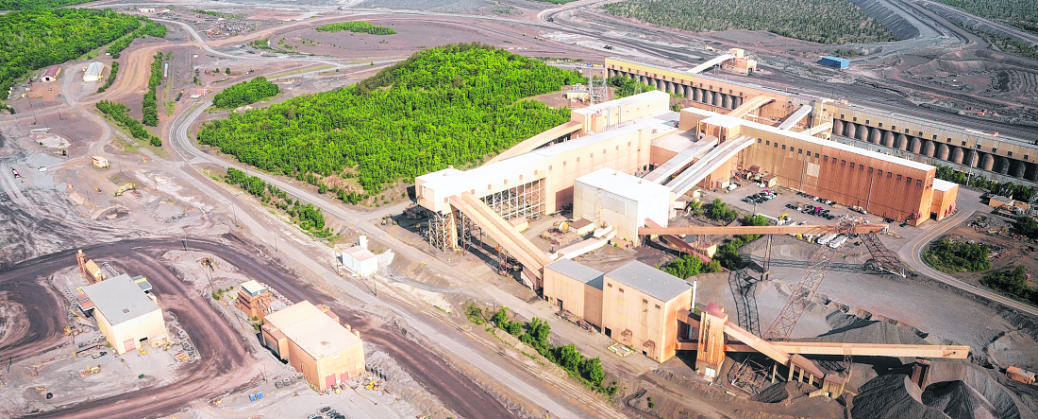
What’s happened at Minntac is the warning sign. U.S. Steel projects that its Minntac taconite mine will operate until about 2044. Yet the Minnesota Pollution Control Agency’s (MPCA) proposed water permit would give the company 45 years — until 2071 — to meet final sulfate and other pollution limits.
That deadline would arrive nearly three decades after Minntac is projected to close.
Minntac discharges more than a billion gallons of heavily polluted wastewater each year into downstream waters.
The tailings basin leaks sulfate toward Sandy and Little Sandy lakes where wild rice was once thick. Today, surveys find only a few stalks. MPCA has identified Minntac as the only possible source of the extraordinarily high sulfate levels in those lakes.
This is not a new problem.
Minnesota adopted its wildrice sulfate standard in 1973, but MPCA hasn’t consistently enforced it. For years, the Legislature restricted MPCA from requiring permittees to invest in sulfate treatment while the state spent years on a study that only confirmed the standard’s validity.
We need to learn from this history. Minnesotans should ask why an industry that depends on our natural resources has been allowed to operate for decades without meeting a water-quality standard designed to protect our resources.
The effects extend beyond wild rice. Minntac’s discharges also threaten a designated brook-trout stream that Minnesota anglers helped to protect through fishing licenses and trout stamps. Downstream communities shouldn’t be left carrying the environmental and financial burden of pollution that should be controlled at its source.
Grand Portage is not trying to kill the Minntac permit. In fact, we helped make meaningful improvements to the first version after a year of consultation with MPCA. MPCA deserves credit for those changes.
U.S. Steel has already missed deadline after deadline. In 2018, when MPCA gave the company seven years to address groundwater pollution, U.S. Steel sued, arguing that compliance would be an undue hardship. Minnesota courts rejected that argument.
Now U.S. Steel has a new owner with substantial resources. Nippon Steel has committed hundreds of millions of dollars to modernize Minntac and Keetac. If the company can invest in producing steel, it can invest in protecting Minnesota’s water. The problem is that it is more profitable not to protect water, especially when they’ve gotten away with it for decades without penalties.
For Grand Portage, this is also about treaty rights. Treaties were not a grant of rights to the tribes, but a grant of rights from the tribes. Our ancestors ceded millions of acres in the Treaty of 1854 while retaining rights to hunt, fish and gather.
Those rights mean little if we can’t use the resources to feed our families or if the resources disappear.
Minntac is one mine, but the GEIS is about learning from what has already happened before approving what comes next. That’s not radical or antimining.
Meanwhile, MPCA is accepting public comments until Oct. 12 on the draft water permit for Minntac. Tell MPCA to change the 45-year limit and require Minntac to develop real treatment solutions within one permit term. Let’s all make sure that generations 45 years from now don’t inherit today’s problems.
Robert Deschampe is chairman of the Grand Portage Band of Lake Superior Chippewa and chair of the Minnesota Indian Affairs Council.