

A large federal financing package for a northeast Minnesota mine with plans for a new Iowa steel mill could benefit executives and businesses with links to President Donald Trump, according to a Minnesota Star Tribune review of federal securities filings.
Jason Miller, a longtime Trump political adviser, also lobbied for Mesabi Metallics shortly before rejoining the White House and two months before Trump announced the steel mill deal in September from the Oval Office.
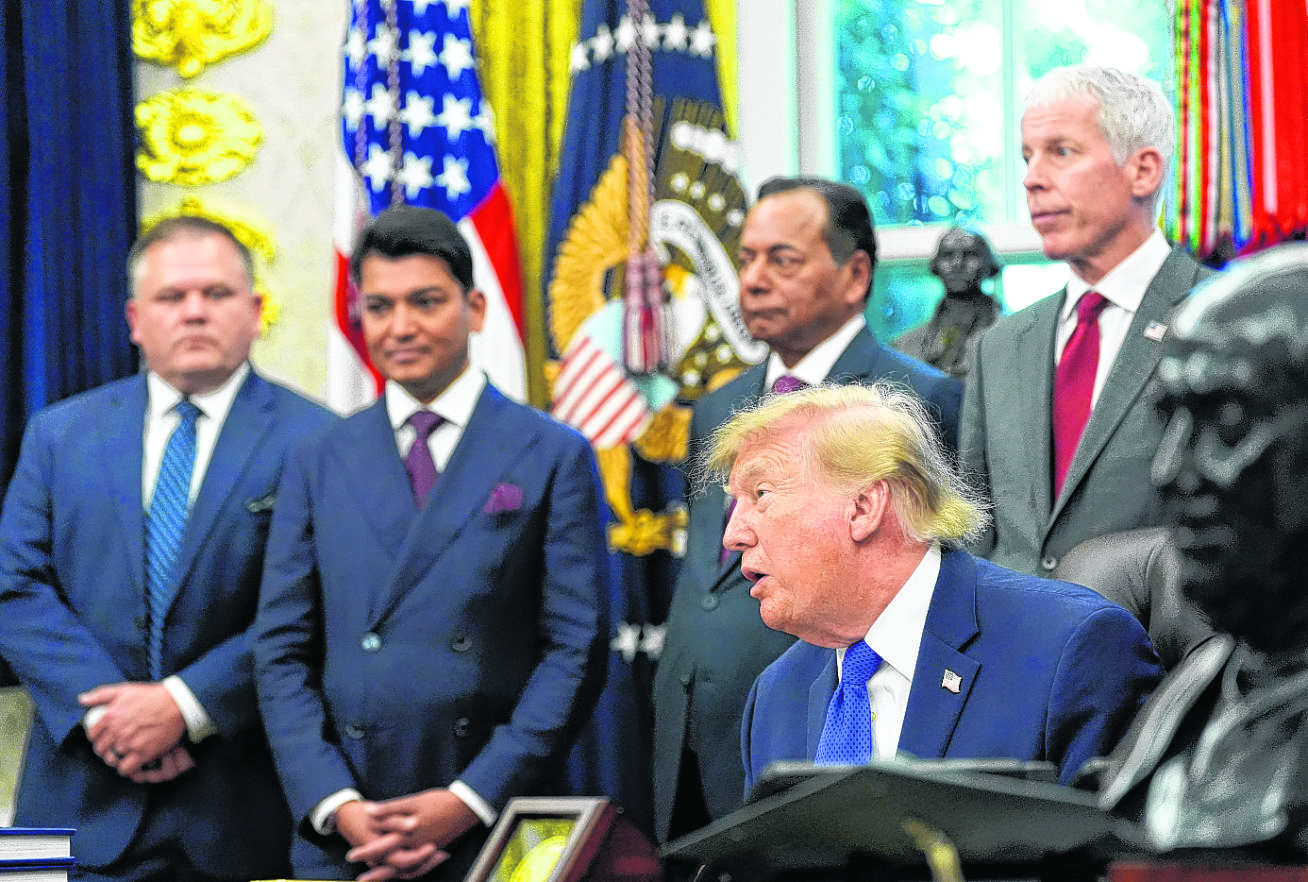
Trump heralded the project as an example of how his tariffs on imports are making American businesses more competitive. His red-carpet unveiling came as he’s trying to showcase economic success before the midterm elections.
The financing package from the Export-Import Bank of the United States (EXIM) — which could be as high as $10 billion — also helps reinvigorate a wealthy Indian family’s tortuous, nearly 20-year quest to open a mine on the Iron Range.
While there is no evidence that Trump, his family or any Trump-related entity will directly benefit from the Mesabi deal, people with close ties to Trump stand to gain.
John Hess, a major Trump political donor whom Trump identified as a longtime friend, has a financial interest in The Metals Royalty Company, which is financing Mesabi Metallics. So does a New Jersey-based firm that’s heavily involved in financing Trump’s media ventures.
Those financing the deal — including the federal government — are also taking a risk, given that the company behind the Minnesota ore project filed for bankruptcy in 2016.
Regardless, critics say the federal financing package for Mesabi raises several questions, from the size of EXIM’s commitment to potential political cronyism.
Daniel Weiner, senior director of the Brennan Center’s Elections and Government Program, stressed everything could well be legal.
But “mutual back scratching” between a former Mesabi lobbyist going to work for the White House and a mine’s financier’s ties to Trump-related businesses, “is why confidence in our government institutions is at a record low.”
There are “enormous questions about whether this deal and this arrangement is ethical,”Weiner said.
A White House official said Miller recused himself from having any involvement with the announcement and didn’t attend it. The official also said Miller complied with government ethics requirements.
EXIM declined to directly answer questions about the project from the Minnesota Star Tribune but released a statement saying it “conducts a rigorous due diligence and underwriting process before entering any loan agreement and will continue to do so to protect the American people’s hard-earned taxpayer dollars and adhere to the statutory requirements set by Congress.”
An Iron Range dream resurfaces in Iowa
EXIM has already approved a $770 million loan to Mesabi Metallics, which is ultimately owned by Ravi Ruia, a billionaire and co-founder of Indiabased Essar Group. The bank has said it would provide up to $10 billion.
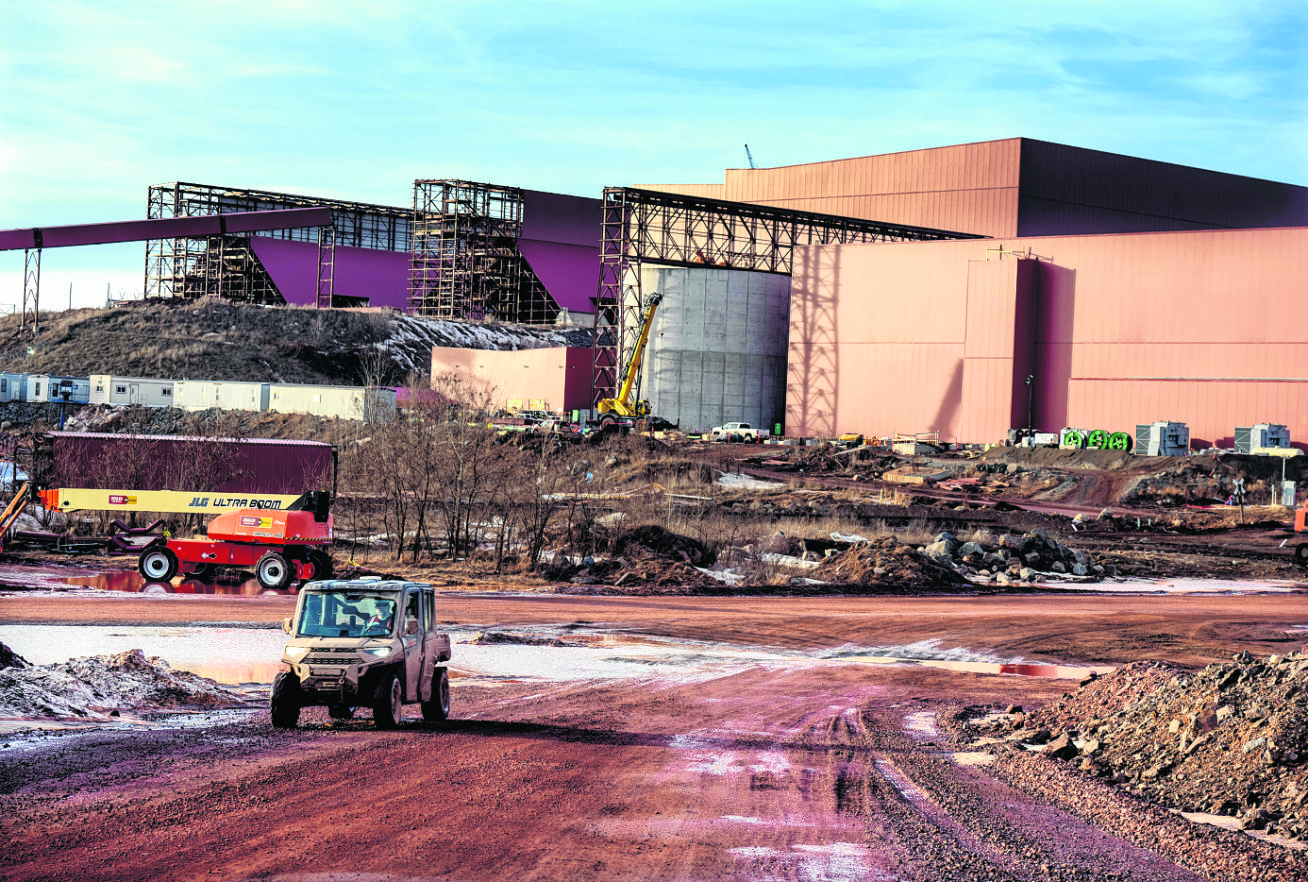
Neither EXIM nor Mesabi Metallics would comment on how that money would be spent. But Mesabi already has plans for a $3.1 billion expansion in Minnesota and a $15 billion steel mill in Iowa, a project once promised to be built in Minnesota.
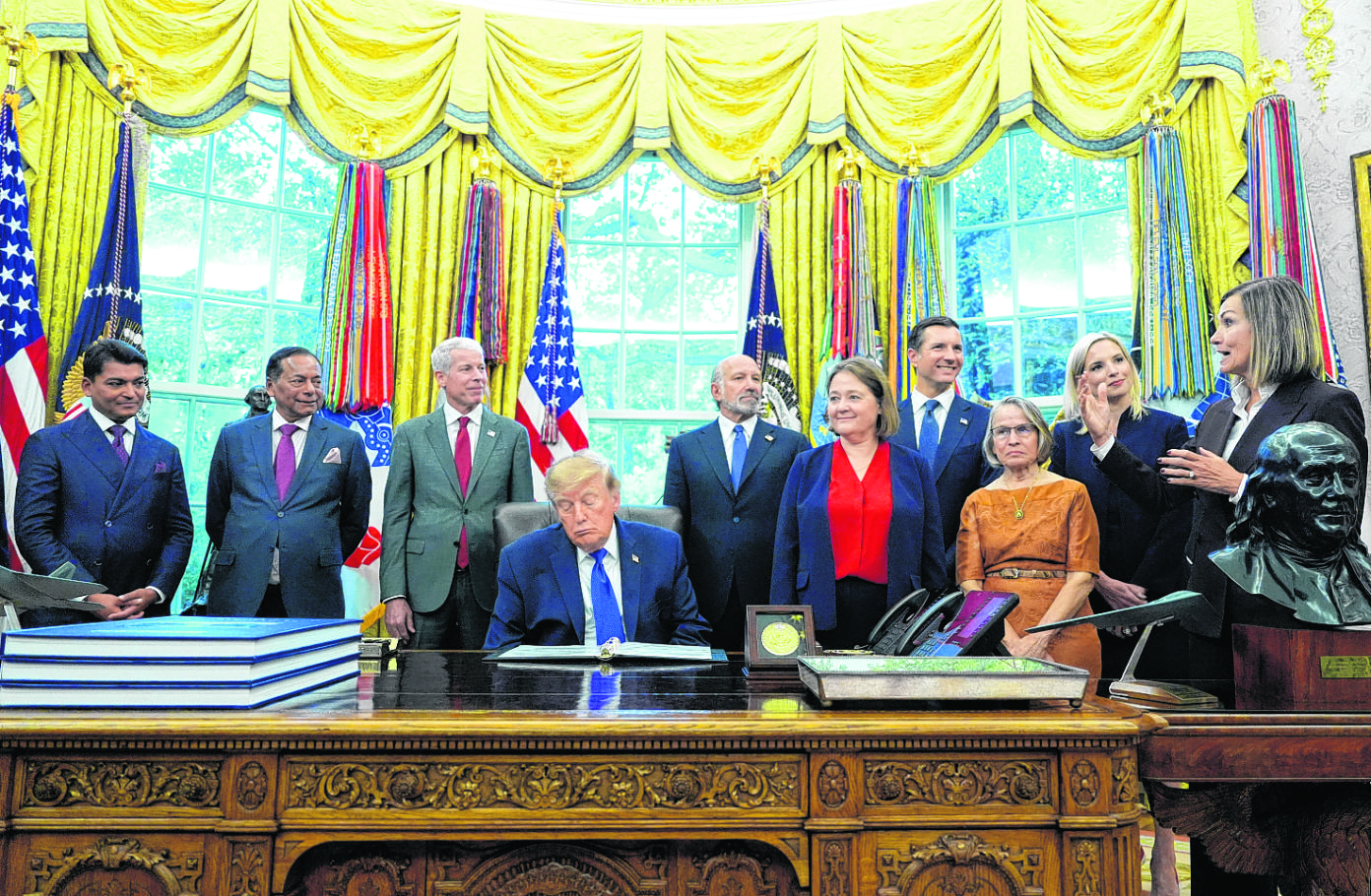
Iowa legislators agreed to give Mesabi Metallics $1.4 billion in tax breaks just four days after the White House announcement.
EXIM’s leader, Essar’s Ruia and Iowa Republicans all gathered in the Oval Office with President Donald Trump.
“This is going to be the first mega-steel plant built in our country since the 1960s and is only possible because (Trump) rolled back burdensome red tape, re-shored industry, and created an environment for companies to build in America again,” White House spokeswoman Taylor Rogers said in a prepared statement to the Tribune.
In 2007, Essar, then one of India’s largest steelmakers, pledged to build a new taconite mine and mill, coupled with the Iron Range’s first steel plant.
The steel mill, a longtime Iron Range dream, faded as Essar faltered — until resurfacing last month in Iowa.
Essar started construction in Nashwauk about 16 years ago, but its ore plant was only half built in 2016 when it ran out of cash and filed for bankruptcy.
Essar later lost critical iron ore leases after missing stateimposed deadlines, and it still owes Minnesota $21.7 million on a $65 million loan plus interest.
Construction resumed by 2024 on the Nashwauk operation, which had been rechristened Mesabi Metallics.
Ties to Trump adviser, friend and media partner
Mesabi Metallics has spent $340,000 lobbying the federal government since August 2025, with 70% of it going to Miller’s company, SHW Partners. Miller, according to lobbying disclosure reports, was hired to lobby the White House, four federal agencies and EXIM.
Mesabi Metallics paid Miller’s firm $240,000, including $120,000 for work between April and June. He ended his lobbying contract in July and is currently a “special government employee” at the White House helping with communications.
In a written statement supplied by the White House, Miller said the deal is a win for President Trump, the United States and the domestic steel industry.
“I’m proud of my work helping to bring billions of dollars of private sector international investment to the United States, which will lead to thousands of new American jobs,” he said.
Aside from EXIM’s $770 million loan, Mesabi Metallics also secured $150 million in financing from Macquarie Group, an Australian investment bank, and a $520 million loan from a partnership involving Vitol, a Netherlands-based commodities trader that’s been shipping Venezuelan oil since the U.S. deposed Venezuela’s leader in January.
The Metals Royalty Company also staked $265 million in Mesabi Metallics in exchange for a percentage of payments from iron ore mined in Nashwauk.
John Hess owns 5% of the Canadian-based royalty company’s common stock and his son, Michael Hess, owns another 5.2%, securities filings show.
Michael Hess is co-chair of the royalty company’s board, and is listed as its co-founder in one filing with the U.S. Securities and Exchange Commission. Ivanka Trump and her husband, Jared Kushner, reportedly attended Michael Hess’ wedding in 2019.
John Hess served as CEO of Hess Corp., a large familyowned oil firm acquired by Chevron for $53 billion in 2025. He donated $1 million to Trump’s 2017 inauguration fund and he and his wife each gave $1 million in December to MAGA Inc., a pro-Trump super PAC, federal election filings show.
At a 2025 White House bill signing, Trump pointed out John Hess and called him “a friend of mine for a long time.”
The Minnesota Star Tribune sent questions to John and Michael Hess via The Metals Royalty Company but received no response.
Affiliates of Yorkville Advisors, a New Jersey company with Trump ties, also helped finance The Metals Royalty Company.
The investment management firm has been heavily involved with Trump Media & Technology Group, home to the president’s Truth Social media platform.
Yorkville affiliates manage and sponsor five exchangetraded funds — which are akin to mutual funds — launched by Trump Media in December.
Yorkville affiliates are also advising Trump Media on its plans to merge with a nuclear fusion company and have bought $450 million in Trump Media stock, securities filings show.
That stock purchase allowed Yorkville to buy Trump Media shares at a discount. Yorkville has a similar arrangement with The Metals Royalty Company, committing to buy up to $100 million in common stock.
Also, a Yorkville affiliate agreed to participate in a stock financing package for The Metals Royalty Company, which was particularly aimed at funding the firm’s deal with Mesabi Metallics. Yorkville declined to comment and The Metals Royalty Company did not respond to requests for comment.
The Metals Royalty Company, which currently has no revenue, has one other major interest aside from Mesabi: a stake in the royalties of a company lobbying to mine the ocean floor for “critical minerals” such as cobalt, nickel and copper — a Trump administration priority.
That ocean mining company in turn has a 20% stake in The Metals Royalty Company.
‘Featherbedding for politicians’
Mesabi plans to export some of its specialized iron pellets to steelmakers in a small but growing part of the industry, though it hasn’t identified its customers.
The business strategy aligns with EXIM’s mission of providing loans, loan guarantees and insurance to U.S. companies for exports.
But under President Joe Biden in 2022, EXIM launched a “Make More in America” initiative that focuses more on financing American manufacturing than the bank’s traditional role of lending money for export deals.
Trump has supersized the Biden-era initiative.
EXIM’s proposed $10 billion financing package for Mesabi would be in a completely different league — dollarwise — than typical EXIM deals. Only one other EXIM-funded project comes close to Mesabi: $10 billion for a critical minerals reserve that involves Boeing, General Motors and Alphabet.
“A lot of these deals that EXIM has done [are] for political reasons,” said Veronique de Rugy, a senior researcher at the libertarian-leaning Mercatus Center at George Mason University in northern Virginia. “Very few of them, if any, are announced in the Oval Office.”
While EXIM has long had support from U.S. businesses, Democrats and Republicans have criticized it for unnecessary subsidies.
Former President Barack Obama, a Democrat, and Republican Ted Cruz have characterized the bank as corporate welfare.
Trump, as a presidential candidate, said in a 2015 interview with Bloomberg News that he didn’t like EXIM “because I don’t think it’s necessary,” calling the bank “sort of a featherbedding for politicians, and a few other companies.” mike.hughlett@startribune.com cvondracek@startribune.com