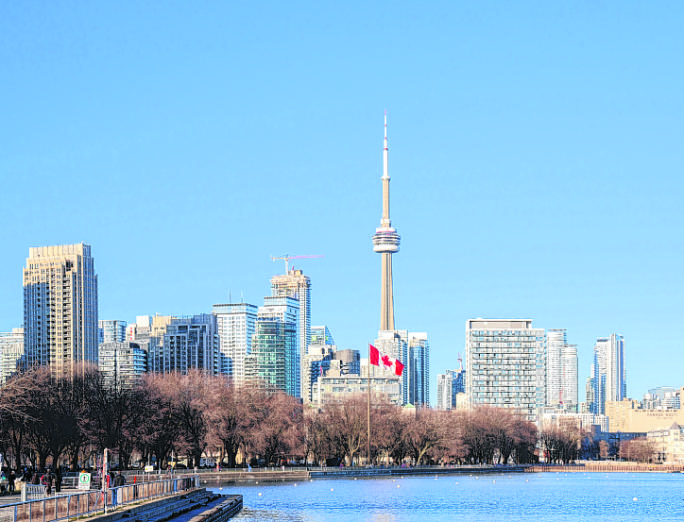


Appeals from American tourism organizations seemed to be everywhere Josh Loewen looked over the last year. Billboards and banners proclaimed a state or city’s love for Canada. Online and social media ads offered special deals for travelers from north of the border.
As a Vancouver resident and marketing executive himself, Loewen said he understands the conciliatory overtures. The number of Canadians traveling to the United States plunged after President Donald Trump returned to offi ce with remarks about making Canada the 51st state. An acrimonious trade war between the two countries now is threatening to reinforce the informal boycott just as it appeared to be easing slightly.
“It’s just a wasted effort,”
Loewen, 45, said of the U.S. tourism industry’s attempts to woo Canadians like him back before a new president occupies the White House.
Relations between the U.S. and Canadian governments have deteriorated sharply since their trade negotiations collapsed last month. Trump imposed import taxes of up to 50% on a range of Canadian products. Canada’s government responded in kind.
Trump ordered the U.S. government to change the name of border-spanning Lake Ontario to “Lake America.” Canadian Prime Minister Mark Carney dismissed insults from members of Trump’s Cabinet as childish.
The bilateral rift has not stopped state and local tourism officials and popular destinations like Graceland from trying to persuade Canadian visitors to return.
New York state launched a “NY Loves Canada” promotion this summer, offering discounts at hotels, restaurants and attractions. Some downtown Las Vegas hotels are treating the Canadian dollar as equivalent to the U.S. dollar to give Canadian visitors more value for their money. Las Vegas tourism officials went to Canada last month to meet with travel advisers, tour operators and airline representatives.
Canada traditionally sent more overnight international visitors to the U.S. than any other country. Amid last year’s consumer-led backlash, sameday trips and longer stays nosedived.
Canadian residents made 25% fewer return border crossings and spent about $2.4 billion (CA$3.3 billion) less on travel to the U.S. in 2025 than they had the year before, according to Canada’s national statistical agency, Statistics Canada.
Tentative signs of improvement emerged in May, June and July, when border crossings picked up slightly.
With the summer winding down, some of the U.S. destinations most dependent on Canadian visitors are heading into an important season. Canadian snowbirds typically flock to warm-weather locations in Florida, Arizona and California.
THE ASSOCIATED PRESS
Tariffs set to take effect
After more than two weeks of finger-pointing, threats and patronizing insults between longtime trading partners, Canada’s latest retaliatory tariffs against the United States were set to take effect just after midnight Eastern time Tuesday.
Polls show that Canadians strongly back Carney’s decision to end trade talks with Washington last month and to hit back with tariffs on about $20 billion in U.S. products entering Canada. But there is also concern over Trump has repeatedly threatened another round of U.S. tariffs if Canada follows through on its plan.
Some in Canadian industry say they are inclined to take Trump at his word, at least on this threat.
People in the Trump administration “are willing to hurt themselves, their own sectors and industries, in pursuit of their goal, however misguided I think it is,” said Flavio Volpe, president of the Automotive Parts Manufacturers’ Association of Canada. “So they may escalate.
I hope that we don’t end up in a tit-for-tat situation. We’re going to run out of runway.”
THE NEW YORK TIMES