

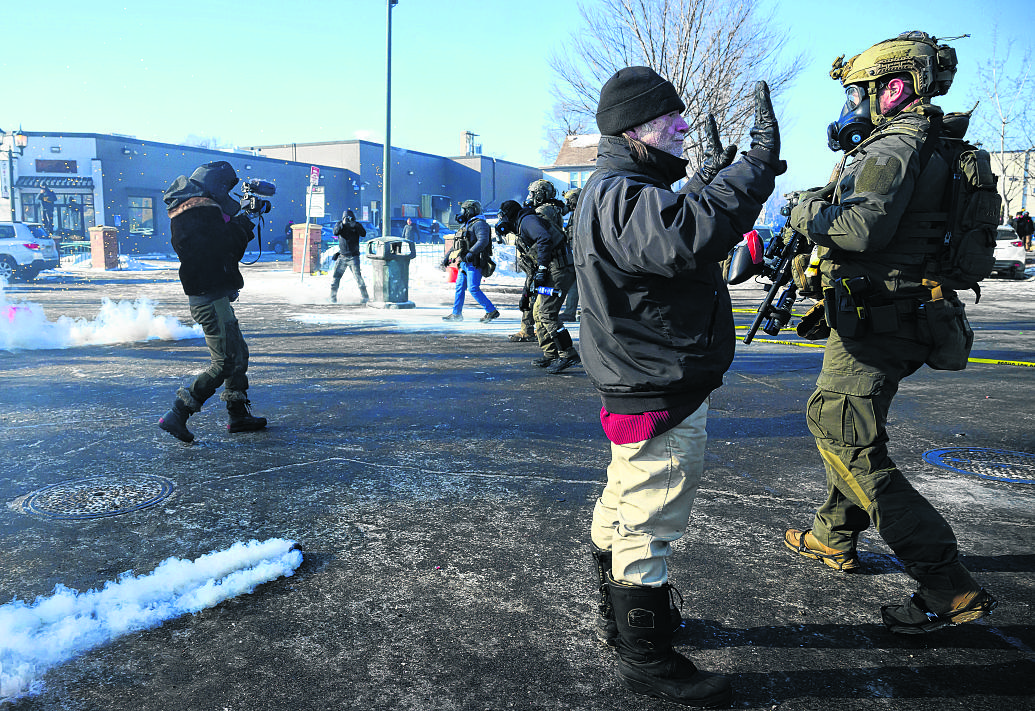


We are watching the Great Wrecking of Minnesota.
The state for so long resisted the embrace of corrosive falsehoods that swept over other states or groups. We weren’t like Florida, where school vaccinations are being phased out amid a national rise in measles. We weren’t like North Carolina, where a battle between its legislative and judicial branches over redistricting wound up in the Supreme Court.
But then the drums began to beat louder about fraud against government programs in Minnesota last summer.
Minnesota’s leaders and the feckless Trump administration have since torn the state apart by exaggerating and overreacting to the problem.
First came the late October decision by state offi cials to impose a 90-day hold on payments to nearly all providers of Medicaid-backed services when only a small number were responsible for fraud.
They threw thousands of caregiving businesses — serving more than 1 million Minnesotans — into economic calamity and brought the state to the brink of a more expensive humanitarian crisis than fraudsters ever caused, even if you believe they have taken billions of dollars. Some caregivers closed, including one assisting 450 disabled Minnesotans in 32 northern counties.
The next month came the smearing of Somali-run child care centers by a right-wing huckster on YouTube, leading the Trump administration to seize upon suspicions of fraud as a pretext for its largest clampdown on immigrants.
It sent 3,000 federal agents to stage raids and arrests in a state with a below-average population of undocumented immigrants in both percentage and absolute terms.
By their own count, those agents arrested more than 10 times as many noncriminal undocumented immigrants than criminal ones. They turned a federal office building into a crowded, inhumane detention center. Tragically, they killed two Minnesotans trying to witness or protest their work.
Along the way, they struck fear in Minnesotans of color, even nonimmigrants. Many have hunkered down at home, creating another major economic problem as employees and customers fear going out in public.
What has this all been for? An edge in the 2026 elections? To halt the nation’s reliance on immigrants? To shift attention away from bureaucratic mistakes or the Epstein files? The answer is all of the above. And most disturbing of all, none of those reasons justify the costs.
Those start with the lives of Renee Good and Alex Pretti and extend to harms being felt by disabled Minnesotans, businesses, the state’s reputation and the actual solving of problems.
The folly and futility of this moment crystallized for me during six hours of testimony before two Minnesota Senate committees on Jan. 29, the day Trump border czar Tom Homan conducted his first news conference after taking over the crackdown on immigrants.
Homan did what so many leaders have done the last four months: He ignored the big picture and burrowed in on one tension point. For him, it was the level at which Minnesota jailers respond to so-called “detainer” requests by federal agents for undocumented immigrants caught in a crime.
If that were really the issue, federal agents and local officials could have resolved it without sending thousands of heavily armed masked men and women to raid Minnesotans’ homes, business and schools.
Later on Jan. 29, a Republican state senator at a hearing on the effects of Operation Metro Surge asked two suburban mayors, who had told stories about random ICE arrests of their citizens, whether they believed federal agents had a right to arrest undocumented criminals in the Hennepin County jail.
Again, here was a person in power zeroing in on the detainer issue, ignoring more important matters of violence, race and politics. In response, Sen. Alice Mann, DFL-Edina, chided people playing the game of “What about this?”
“I very respectfully ask that people stop playing the ‘both sides’ card,” Mann said.
“Because when you do that without pointing to where the violence is coming from, you are squarely on the side of the oppressor and that is a bad, bad look.”
A short time later, in another conference room, came more emotional testimony from disabled Minnesotans and caregivers about the effects of the funding restrictions born out of the scramble to halt fraud. “It’s clear there’s been a lot of collateral damage,” Sen. Jim Abeler, R-Anoka, said at the hearing.
It’s also clear The Great Wrecking of Minnesota is not over.
The hyping of fraud allegations led many Trump officials to cut, or threaten, federal funds to Minnesota — far beyond the Medicaid programs where the problems are centered.
Even more absurdly, federal prosecutors in Minneapolis pursuing fraud wound up quitting after being told to instead investigate people hassling ICE and the Border Patrol.
In other words, the people who were fighting fraud in human services programs here have stopped because of the immigration crackdown.
The longer-term problem will be immigrants, legal and undocumented, leaving Minnesota — or never coming to it.
Population data for 2025 already shows the flow of immigrants to Minnesota fell by two-thirds from the year before. ICE leader Marcos Charles boasted on Jan. 23 the agency has arrested 10,000 undocumented immigrants in Minnesota in the first year of Donald Trump’s second term.
If you believe the number, that’s more people than all but 80 or so of Minnesota’s 853 communities.
Dimensions of The Great Wrecking of Minnesota are unjust and immoral, but I concentrate on unforgiving economic realities. Downward pressure on Minnesota’s population is one.
I now fear most for towns where the economic engine is a food-processing company relying heavily on immigrant workers. The Great Wrecking of Minnesota may wipe out one or more of those businesses.
It could be a beef plant in Long Prairie or Buffalo Lake, a turkey plant in Willmar or Pelican Rapids, a vegetable plant in Le Sueur or Owatonna or even one of the huge pork plants in Austin or Worthington.
It could be more than one of them.
In their distortions and misjudgments about fraud and immigration, people who should know better forgot how many Minnesota communities survive today because immigrants, including those who are undocumented and trying to become citizens, do difficult or dirty work other people won’t.
evan.ramstad@startribune.com