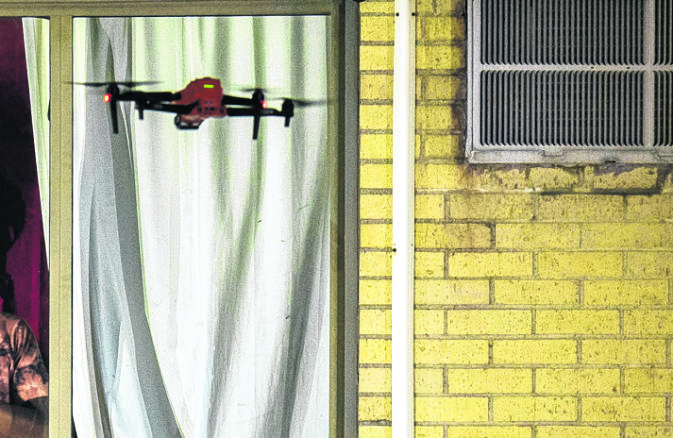


With one member on leave, the Minneapolis City Council deadlocked Thursday on whether to do a 75-day pilot program using two more drones to help police north Minneapolis.
That means there weren’t enough votes for passage, so the pilot program won’t be done.
However, Minneapolis police already use drones. They’ve used them since 2022, launching the small aircraft for hundreds of missions from squad car trunks.
City Council Member LaTrisha Vetaw proposed to expand the drone program to her north Minneapolis ward, saying the small aircraft could respond much quicker than the understaffed Police Department and give police valuable information about what’s happening on the ground, reducing response times and freeing up police for other calls.
But the proposed free trial with Skydio prompted a wave of opposition because the company supplies drones to the U.S. Department of Defense and 29 allied nations, including Israel.
Opponents warned that if the city partnered with Skydio they would be complicit in the Israeli military’s operations in Gaza.
Vetaw questioned that rationale, saying: “At times it feels like members of this body are searching for reasons to say no instead of looking for reasons to give this pilot a chance. To make the outcome of this decision hinge on whether a country halfway around the world purchases equipment from the same company does not make sense to me.”
Dozens of concerned citizens showed up at City Hall to oppose the pilot program earlier this month, with 41 people urging the council to reject the pilot program, while nobody testified in favor.
Opponents said people are already under too much surveillance, especially during the recent immigration crackdown, and argued Minneapolis should not trust its police force with such powerful technology, which could lead to violations of civil liberties and surveillance of protests.
Council Member Aurin Chowdhury said during the ICE surge her offices documented 40 cases of drones in her ward that residents couldn’t identify, even after checking with city, county and federal authorities.
“My constituents are traumatized by drones flying over their households,” she said.
“They do not like them. They feel surveilled. They’ve been followed by drones. They’ve had drones show up by their windows 5 a.m.”
Supporters said drones could help officers navigate dangerous situations; they’re often used to help SWAT units serve high-risk search warrants.
Mayor Jacob Frey joined the council meeting Thursday to lobby for the program, and noted St. Paul, Duluth, Rochester, Minnetonka and Brooklyn Park already partner with Skydio.
“Refusing this pilot I don’t believe sends a message to Israel,” Frey told the council.
“It does make it more difficult for us to provide the necessary safety to our residents.”
That didn’t land well with the more progressive council members who opposed the contract.
Council Vice President Jamal Osman was originally a co-author of the proposal, but changed his stance due to Skydio’s connection to the Israeli military.
He was joined in voting no by council President Elliott Payne and council members Jason Chavez, Robin Wonsley, Chowdhury and Soren Stevenson.
Those who supported it were council members Pearll Warren, Elizabeth Shaffer, Michael Rainville, Vetaw, Linea Palmisano and Jamison Whiting.
deena.winter@startribune.com